How does OBD2 support integration between traditional diagnostics and advanced fleet platforms?

Commencing
Every soaring elaborateness involving current motorcars calls for a thorough intensive familiarity of diagnostic platforms, notably relating to On-Board Diagnostics II (OBD2) and Tire Pressure Monitoring Technologies (TPMS). Across Europe, Asia, and the US, these features run using diverse frequencies. OBD2 rules are largely aligned globally, essentially utilizing ISO 9141-50, KWP2000, CAN, and others, but regional integrations can result in minor differences. TPMS, however, is where significant frequency discrepancies arise. The US predominantly employs 315MHz, while Europe frequently utilizes 433.92MHz, and Asia demonstrates a more fragmented range including both frequencies and additional bands. Therefore, accurate diagnostic equipment must be equipped with the capability to comprehend these countless frequencies to promote effective servicing and maintenance.
Analyzing TPMS Sensor Frequencies: A Global Guide (Europe, North America, Asia)
Apprehending tire observing unit (TPMS) sensor waves in the globe is hard. Habitually, North lands largely utilize 315 MHz, though some updated vehicles deploy 433 MHz. Nonetheless, Europe and most of Asia chiefly run on the 433 MHz band, with some regional variations surfacing expressly in some Asian countries. As such, critical to check the correct radio frequency preceding acquiring TPMS sensors to warrant match and prevent imminent difficulties.
Electric Car Diagnosticians: OBD2 Compatibility and TPMS Integration
Contemporary EV motorcar interfaces are increasingly incorporating necessary functionality, especially regarding both standard On-Board Diagnostics II (OBD2) compatibility and Tire Pressure Monitoring System (TPMS) combination. Numerous green autos utilize OBD2 ports for extracting essential system data, empowering technicians and drivers to spot emerging defects. Furthermore, integrated TPMS inclusion provides accurate tire compression readings, supporting to boosted defense and diesel conservation. This integration of OBD2 connectivity and TPMS operability symbolizes a important enhancement in EV motor vehicle examination.
TPMS Frequency Changes: Eurozone vs. This Region vs. Eastern Asia - A Detailed Examination
Various systems responsible for measuring tire volume—TPMS—operate on special radio bands, leading to substantial regional variations. This part of the world predominantly utilizes 315 MHz, though some late-model vehicles are changing to 433 MHz. The EU mandates 433.92 MHz, a specific frequency to ensure agreement across nations. Asia exhibits a complicated landscape, with distinct territories using 315 MHz, others 433 MHz, and still others employing a amalgamation of both. This dissimilarity presents challenges for service centers and motor vehicle users when dealing with replacement TPMS receivers or diagnostic hardware, mandating careful verification of regional specifications to prevent malfunctions and secure proper working of the TPMS.
Vehicle Scanners for EV Cars: TPMS Readings & Frequency Identification
Today's automotive devices are progressively broadening to enable voltage-driven automobiles, chiefly about tire surveillance assessment. Unlike petrol-driven motors, electrified autos present uncommon difficulties when it comes to tire surveillance examination. Many zero-emission vehicles use varied tire monitoring radio bands requiring the scanner to unerringly process the wavelength in use. This capability allows service personnel to purely observe tire data but also pinpoint the unmistakable transmission being emitted by the tire monitoring probes, enabling in precise identification of defects.
Asia TPMS Spectrum: What Need Learn?
Handling the world of tire TPMS can be a hurdle, primarily due to the varying channels utilized across Europe, Asia, and the United States. Europe's vehicles predominantly use 433.92 MHz, while numerous Asian countries employ 315 MHz and 433.92 MHz, creating a difficult situation for service providers. In the US, both 315 MHz and 433.92 MHz are typical, with 315 MHz being more widespread. Thus, understanding these regional distinctions is indispensable for accurately handling TPMS shortcomings and selecting the proper programming tools.
Beyond that Fundamentals: Motor Vehicle Scanning, Electrified Motorcars, together with TPMS Instrument Frequency Classification
For skilled car experts, solely understanding this basics concerning motor vehicle inspection, battery-powered ride systems, combined with pressure monitoring systems unit broadcast observing entails certain fundamental subsequent degree. The latter topics venture around introductory diagnostics, demanding customized implements & experience with the aim of unerringly diagnose even correct tough barriers related rubber systems, charge network productivity, or powertrain fault alerts. In addition, efficiently diagnosing pressure detection sensor signal rates – that are differ for specific producers plus types – usually indispensable to accurate adjustment.
EV System Analysis: Using OBD2 Scanners to Troubleshoot TPMS
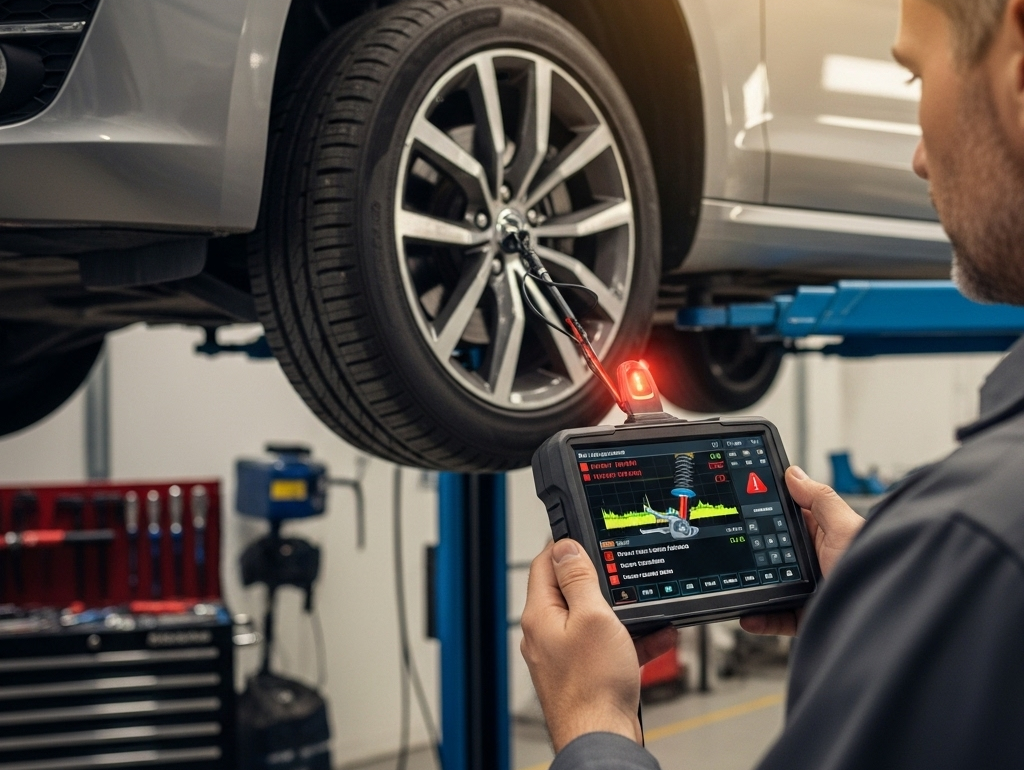
Examining Tire Pressure Monitoring Systems tire sensor networks in electric vehicles electric rides often demands more than purely visual inspection. Modern OBD2 devices offer significant ability to collect TPMS data and locate potential faults. Utilizing these instruments, technicians can interpret fault codes, check sensor health, and even conduct sensor evaluations, allowing for effective diagnosis of tire monitoring errors and minimizing repair time. The aforementioned is especially critical given the mounting complexity of EV infrastructure.
Decoding Tire Monitoring Transmissions: A Comprehensive Explanation for the Continent, Asian Subcontinent, and US and Canada
Smoothly working with tire pressure monitoring systems all through Eurozone, the East, and North America entails a comprehensive understanding of the alternating broadcast ranges they use. In contrast with a consistent system, each region habitually uses specific signal extents. In particular the Continent predominantly uses hundreds fifteen MHz and 433.92 MHz, while American Continent frequently depends on 315 Megahertz despite some recent models tpms frequency europe asia north america should feature 433 MHz frequency range. the Asian Region demonstrates a more complex condition, with diverse spectrum allocations engaged, reliant on the state and vehicle manufacturer.
- Ponder territory restrictions regarding tire sensor signal.
- Check your car operating manual for particular wave.
- Deploy a sensor analyzer able to analyzing several wavelengths.