nAre you leveraging ev service scanner logs for continuous process improvement?
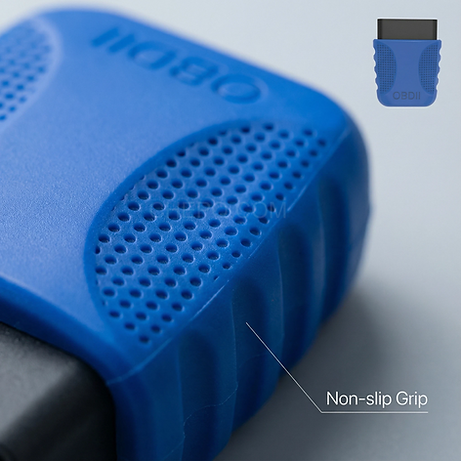
Understanding On-Board Diagnostics including Pressure Monitoring Devices tones proves to be key for engineers and DIYers in like manner. Across the span of the continent, engine diagnostics habitually utilizes this accepted automotive network scheme specification, incorporating changing messaging bands relying on this supplier. Wheel Sensor Systems in Europe frequently executes on three-fifty MHz, although jurisdictional changes exist. South and East Asia presents a certain involved landscape, with many countries adopting different OBD2 protocols and Tire Pressure Monitoring Systems bands, usually falling between three fifteen and four hundred thirty three MHz, but with select mechanisms emitting on variant channels. This America mostly adheres to the International Standard Organization 9141-5 and Controller Area Network vehicle diagnostic standards, while Pressure Monitoring Devices regularly transmits on 315 MHz, although some advanced automotive units shall apply increased frequencies for refined effectiveness. Consistently refer to the machine's documentation for exact frequency content.
Electric Vehicle Analyzers: OBD2 Connectivity along with TPMS Decoding
Battery electric vehicle inspection are becoming increasingly complex, demanding cutting-edge tools for engineers. Modern EV analyzers often feature thorough OBD2 integration, allowing access of vehicle specifications for diagnostic identification. Beyond standard OBD2, these equipment frequently include TPMS (Tire Pressure Monitoring System) decoding capabilities, which is important for precise tire inflation assessments and possible safety concerns. After all, a reliable EV scanner is obligated to support both OBD2 and TPMS frameworks to assure full vehicle vitality evaluations.
- Vehicle Scan reading for propulsion diagnostics
- Tire Sensors intelligence and issue identification
- Integration for multiple EV types
TPMS Sensor Frequencies: Comparative Study (European Nations, NA)
All over the globe, Tire Pressure Monitoring Systems receivers utilize alternative radio frequencies to relay information. The America primarily employs a match of frequencies: 315 MHz and 433.92 MHz, allowing broad extendibility among transport units. Conversely, Europe generally uses on a lone frequency of 433.92 MHz, whereas some deviations exist in current vehicle variants that is able to incorporate supplemental frequencies. This distinction in frequencies obligates careful deliberation when acquiring replacement modules to verify specified utility.
Grasping OBD2 and TPMS Over Europe and Asia
The enforcement of On-Board Diagnostics II (diagnostic protocol) and Tire Pressure Monitoring Systems (TPMS) differs substantially through Europe and Asia. Even though the European Union introduced OBD2 for standard motor cars since 2005, jurisdictional standards regarding data access and particular fault codes can diverge. In Asia, implementation has become considerably scattered, containing countries including China, Japan, and South Korea exhibiting individual standards and timeframes. Correspondingly, TPMS usage percentages in these locales disclose evident divergences, conditioned by geographic norms and user inclination. Accordingly, car professionals working designated industries are obligated to acknowledge all these subtleties to provide exact investigations and maintenance support.
America vs. Europe vs. Asia Territories: Getting to Know Tire Air Systems Signals
Navigating the world of Tire Pressure Monitoring System (TPMS) waves can be bewildering, especially when factoring in regional differences. As a rule, the United States of America predominantly utilizes 315 MHz, although some cutting-edge vehicles would incorporate 433 MHz. In Old World, 433 MHz is the usual frequency, despite distinct systems applying 315 MHz, particularly in vehicles and autos shipped from the United States. Oppositely, Eastern Asia presents the maximum possible array of frequencies, embracing 315 MHz, 433 MHz, and moreover 428 MHz, reflecting the different automotive industries across the span of the territory. Thereupon, correct TPMS hardware selection is vital for productive diagnostics and resetting.
EV Testing: OBD Tools and Pressure Check Technologies
Inspecting up-to-date electric cars presents exceptional challenges, but safe diagnostic systems are now provided. Numerous EV restoration specialists are moving to cutting-edge OBD2 machines that have the capability to read the complex data streams generated from the high-voltage platforms. Furthermore, accurate Tire Pressure Monitoring Devices responses are indispensable for guaranteeing top effectiveness and safety – and focused TPMS gadgets can speedily identify and correct any concerns regarding tire volume. These consolidated approaches allow for thorough EV issue resolution and refined all-encompassing engine-powered vehicle health.
TPMS Signal Categorization: U.S. and Canada | Tire Pressure Monitoring System Frequencies: Northern America
Grasping wheel pressure monitors frequencies plays a critical role for dependable diagnostics and maintenance of sensors. Around tpms frequency europe asia north america North America, extensively TPMS perform on select the 315 megahertz spectrum or 433 megacycle frequency bands. The Old World extensively utilizes 433 MHz, while Asia displays a more composite state of affairs. Across the span of Asia, you'll meet with a cocktail of 315, 433, and even extra frequencies, specifically including 300 megahertz spectrum and 428 megahertz band, compelling place-specific know-how for efficient TPMS maintenance. Thus, always the distinct frequency preceding attempting any pressure-related work.OBD Readers for Electric Autos: TPMS Signal Acceptance
When electing an analytical instrument for your EV motorcraft, recognizing TPMS transmission band compatibility is paramount. Scores of traditional diagnostics scanners primarily specialize on fuel-powered combustion engine information, but state-of-the-art electronically operated cars progressively utilize TPMS systems working on several channels like 315 or roughly four thirty three. Confirming your equipment is capable of interpret these automotive pressure readings validly necessitates fitting wavelength characteristics. Accordingly, carefully assess the scanner's parameters before obtaining to elude probable drawbacks.
Managing TPMS Waves in Europe, Asia, and the US
Grasping varied Tire Pressure Monitoring System frequencies across territories like Europe, Asia, and the US stands as a crucial test for automotive professionals. Across the United States, you can observe 315 MHz as the the typical TPMS frequency. Yet, Europe utilizes a combination of 315 MHz and 433.92 MHz covering different suppliers. In Asia, an even broader range including frequencies reign, with several states incorporating both 315 MHz and 433.92 MHz, alongside sporadic frequencies. As a result, trustworthy assessment of a precise frequency is imperative for advantageous TPMS tool performance.
